Post-PT Recovery Companion

Don't Lose Your Progress After PT Ends

Physical therapy worked. But now you're on your own, and the exercises are fading. FlexPath keeps you consistent, confident, and moving forward — so your progress doesn't disappear.

Start Free Trial

1 week free • No credit card required • iOS

Post-PT Support
AI-Powered
7-60 min
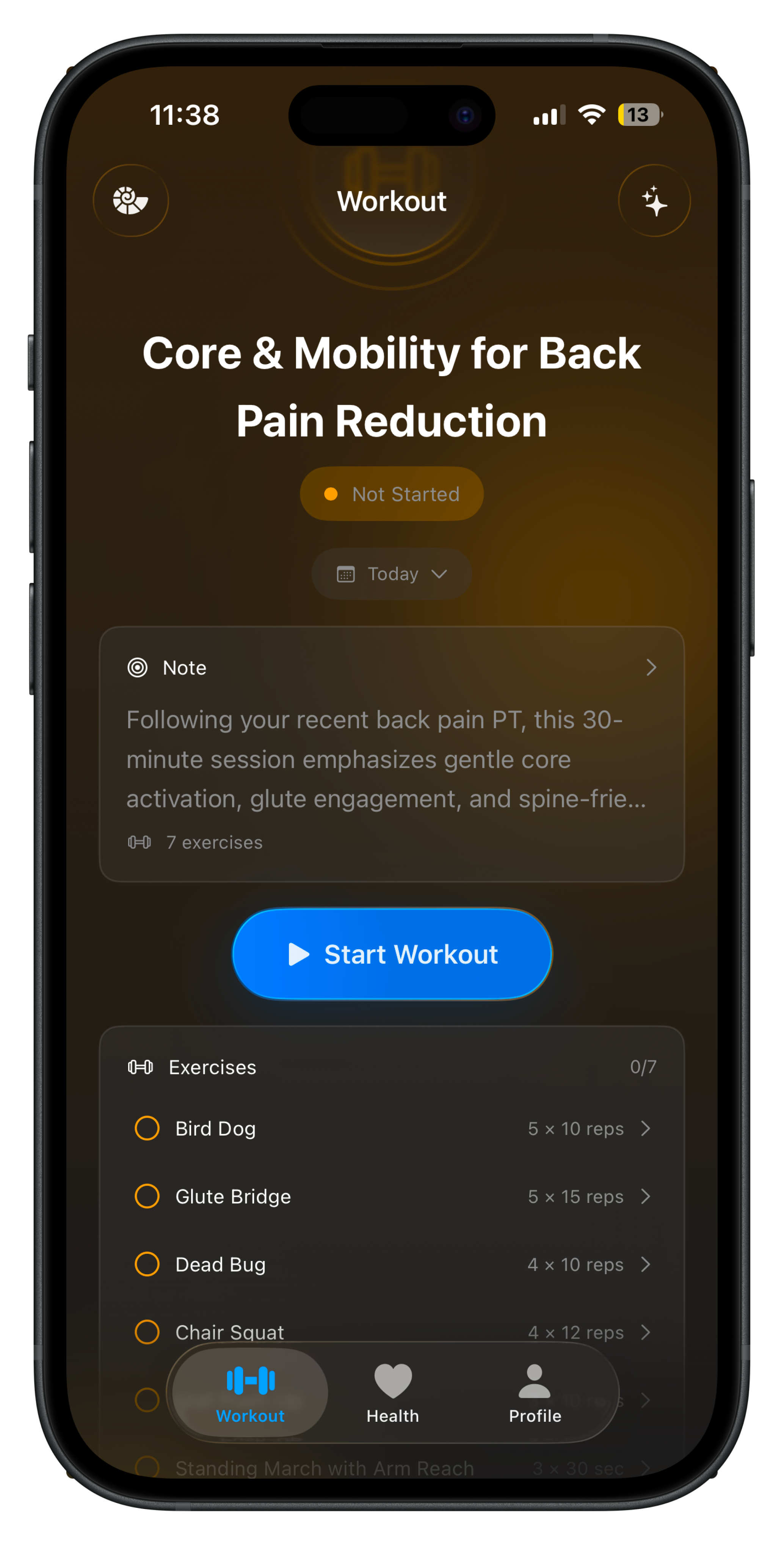
FlexPath App Screenshot

Why Patients Lose Progress After Physical Therapy Discharge

Physical therapy works. But the moment you're discharged, the structure disappears. Bridging the gap between clinical discharge and at-home recovery — that's what FlexPath does.

Exercises Fade From Memory

You remember some of what your PT gave you, but the details blur. Which order? How many reps? Was it this stretch or that one?

Consistency Breaks Down

Without appointments keeping you accountable, the home exercises slowly stop. Life gets busy. Motivation fades.

Fear of Going Backward

You've made real progress, but you still feel fragile. One wrong move and you could be back where you started.

PT Can't Follow Up With Everyone

Your therapist cared, but they have dozens of patients. There's no structure for ongoing support after discharge.

Pain Creeps Back In

Stiffness returns. Flare-ups happen. Without a plan, the cycle repeats and you end up right back in the clinic.

Fitness Apps Don't Understand You

Generic fitness apps push "no pain no gain." You need exercises that respect your recovery, not ignore it.

Result: Progress disappears. Confidence fades. And too many people end up starting over from scratch.

How FlexPath Supports Post-Discharge Recovery

FlexPath extends your care beyond the clinic — maintaining exercise consistency after physical therapy with structure, guidance, and accountability.

1

Tell Us About Your Recovery

Describe your condition, pain areas, and what you've been working on in PT. Use your own words — no medical jargon required. Back pain, knee rehab, shoulder recovery, desk posture — we understand.

2

Get a Structured Daily Plan

AI builds a plan around your condition and schedule. Sessions from 7 to 60 minutes — fitting into real life between meetings, after the kids are down, or whenever you have capacity.

3

Follow Guided Exercises

Prep countdowns, clear instructions, timers, and rep tracking. Apple Watch support lets you follow along on your wrist. Never wonder "am I doing this right?"

4

Your Plan Evolves With You

Rate difficulty, flag exercises that don't feel right, and add notes. The AI adapts your plan based on your feedback — building you toward full confidence and autonomy.

AI-Powered Features for Post-PT Exercise Consistency

Structure, guidance, and accountability — the things that kept you on track during PT, now available in your pocket.

AI-Built Recovery Plans

Plans tailored to your condition — back pain, knee rehab, shoulder recovery, desk posture. Describe your situation in plain language.

Respects Your Recovery

Safe, equipment-free exercises designed to help you feel better — not push you into a flare-up. Not a fitness app. A recovery tool.

Clear Daily Structure

Prep countdowns, timers, rep tracking, and step-by-step instructions. The structure your PT gave you — now in your pocket.

Fits Your Real Life

Quick 7-minute sessions between meetings or deeper 60-minute routines on the weekend. Consistency over intensity.

Apple Watch Support

Follow along on your wrist with haptic feedback. Live Activity and Dynamic Island keep your exercise front and center.

Track Progress Beyond Pain

Heart rate monitoring, HealthKit sync, and workout history. See your consistency grow — not just whether it hurts less.

Feedback-Driven Adaptation

Rate difficulty, flag exercises that cause discomfort, add notes. Your plan adapts to what your body actually needs.

You Stay in Control

Pause, resume, or skip any exercise. Bilateral control lets you work each side individually. Rest breaks built in. Your body, your rules.

FlexPath Is

A consistency layer for post-PT musculoskeletal recovery.

Back Pain Knee Rehab Shoulder Recovery Desk Posture Pain Recurring Flare-ups

FlexPath Does Not

  • Replace physical therapy
  • Diagnose conditions
  • Change clinical programming

It extends care beyond the clinic — without adding burden to your PT.

Who Benefits From Post-Physical-Therapy Recovery Support

After structured care ends, before full confidence returns — FlexPath serves patients in the critical transition from clinic to independent recovery.

Tracy - Desk pain and PT graduate

Tracy, 34

Sr. Manager, Chronic Back & Neck Pain

Finished PT for desk-related back and neck pain. The sessions helped, but now she's back at her laptop 10 hours a day and the stiffness is creeping in. She knows the exercises work — she just can't remember them all or find time.

Needs: Quick daily structure (10-20 min) that prevents her pain from coming back.

Sarah - Post-PT shoulder recovery

Sarah, 32

Graphic Designer, Shoulder Rehab

Went through PT for a shoulder injury from repetitive strain. She's been discharged, but still feels fragile. Afraid one wrong move could set her back. Wants to keep improving but doesn't know what's safe to do next.

Needs: Confidence that she's doing the right exercises without risking a flare-up.

Manny - Chronic back pain management

Manny, 41

Software Engineer, Chronic Back Pain

PT helped him manage his chronic back pain, but he's been discharged twice and regressed both times. The exercises stop, the pain returns, and he ends up back in the clinic. He needs something to break the cycle.

Needs: Ongoing structure so he doesn't "start over" again.

Mike - Post-surgery knee rehab

Mike, 54

Early Retiree, Post-Knee Surgery

Completed PT after knee surgery. He's better, but not where he wants to be. Avoids stairs, thinks twice before long walks. His PT said "keep doing the exercises" — but gave him a sheet of paper and wished him luck.

Needs: Low-impact routines that help him trust his knee again — with real guidance.

Also built for people managing:

Chronic back pain Knee pain (post-rehab) Shoulder recovery Desk-related posture pain Recurring flare-ups Any non-surgical MSK condition

Built by Someone Who Lives the Problem

"I am 40 years old. I spent 20 years abusing the body this mind lives in — poor posture, constant sitting, zero mindful movement. Add work stress, life stress, and Erb's palsy on my right arm.

I knew physical therapy worked. But after every round of PT, the same thing happened: I'd get discharged, lose the structure, and slowly regress. The exercises faded from memory. The motivation disappeared. I'd end up right back where I started.

I realized there was nothing for that gap — after structured care ends, but before you can fully trust your body again. No app understood that window.

So I built one."

Our mission: To help people stay consistent with their recovery exercises after PT ends — so their progress doesn't disappear and they never have to start over.

Frequently Asked Questions About FlexPath

Common questions about post-physical-therapy recovery support and how FlexPath helps.

What is FlexPath?

FlexPath is an AI-powered iOS app that helps people stay consistent with their recovery exercises after physical therapy ends. It bridges the gap between clinical discharge and full independent recovery by providing structured, personalized exercise plans for musculoskeletal conditions.

Who is FlexPath designed for?

FlexPath is designed for people who have completed or are finishing physical therapy and need ongoing structure to maintain their recovery. It supports conditions including chronic back pain, knee rehab (post-surgery or post-rehab), shoulder recovery, desk-related posture pain, and recurring musculoskeletal flare-ups.

Does FlexPath replace physical therapy?

No. FlexPath does not replace physical therapy, diagnose conditions, or change clinical programming. It extends care beyond the clinic by providing structure and accountability for home exercises after PT discharge.

How does FlexPath create personalized exercise plans?

You describe your condition, pain areas, and recovery history in plain language. FlexPath's AI builds a structured daily plan tailored to your situation, with sessions ranging from 7 to 60 minutes. The plan adapts over time based on your feedback — difficulty ratings, flagged exercises, and notes.

What conditions does FlexPath support?

FlexPath supports post-PT recovery for back pain, knee rehab, shoulder recovery, desk-related posture pain, recurring flare-ups, and other non-surgical musculoskeletal conditions.

Is FlexPath free to use?

FlexPath offers a 1-week free trial with no credit card required. After the trial, a subscription is required to continue using the app.

What devices does FlexPath support?

FlexPath is currently available on iOS (iPhone) with Apple Watch support including haptic feedback, Live Activity, and Dynamic Island integration. Heart rate monitoring is available via HealthKit. An Android version is planned for November 2026.

How does FlexPath help maintain exercise consistency after physical therapy?

FlexPath replaces the structure that physical therapy appointments provided — daily plans, guided exercises with timers and rep tracking, feedback loops, and adaptive progression. It addresses the common problem of exercise plans fading from memory and motivation declining after PT discharge.

Don't Let Your Progress Disappear

PT worked. FlexPath keeps it working. Download now and get your first week free — structure, guidance, and consistency from day one.

Recovery-First
AI-Powered
Stay Consistent

Download Now

Download on the App Store

First week free • No credit card required

Android app launching in November 2026